Heat Index Calculator
This calculator estimates the temperature felt by the body as a result of air temperature and relative humidity.

Use Relative Humidity
Use Dew Point Temperature
What is Heat Index?
Often called humiture, the heat index works like wind chill by expressing how hot it feels rather than the measured temperature. For instance, when the air reads 83 °F with a humidity of 70 %, the felt temperature climbs to roughly 88 °F. This gap between actual and perceived heat stems from the combination of temperature, moisture in the air, and wind speed.
How hot we feel is largely personal and can be influenced by life stages such as menopause or pregnancy, medication use, hydration status, body shape and metabolic rate. Elevated humidity slows the body's ability to cool itself because sweat evaporates more slowly. Since the body loses heat mainly through the evaporation of sweat, a reduced evaporation rate means less cooling and a stronger sense of heat. The heat index tries to capture this sensation; although it can technically be applied indoors, it is primarily used for outdoor conditions.
How to Calculate Heat Index?
Similar to the wind‑chill index, the U.S. National Weather Service’s heat‑index calculation relies on a set of assumptions about a person’s weight, height, clothing, activity level, blood viscosity and wind speed. When an individual’s real‑world characteristics differ markedly from these assumptions, the index may misrepresent the actual feeling of temperature. The formula, created by George Winterling in 1978, is intended for temperatures of 80 °F or higher and relative humidity of at least 40 %. Below is a chart derived from Winterling’s equation that shows estimated temperatures and the corresponding danger levels for various humidity percentages.
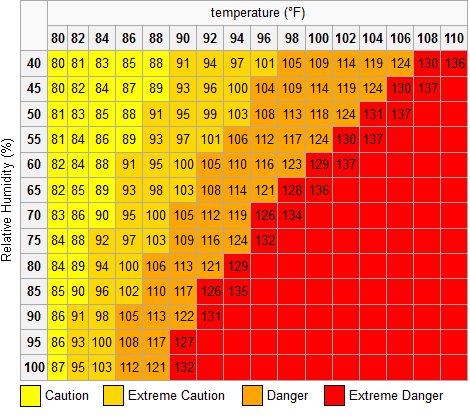
Potential effects of heat index
As noted earlier, the heat index represents the temperature humans perceive when air temperature, humidity, and wind speed interact. High values can have serious health implications. When hot, humid conditions prevail, the evaporation of sweat is impeded, limiting the body’s natural cooling mechanism. Consequently, overheating and dehydration can arise, ranging from mild discomfort to severe illness. The following table, sourced from Wikipedia, outlines potential health issues linked to different heat‑index ranges.
Effects of the heat index
| Celsius | Fahrenheit | Notes | |
| 27-32°C | 80-90°F | Be cautious: prolonged exposure may cause fatigue and, with continued activity, heat cramps could develop. | |
| 32-41°C | 90-105°F | Extreme caution: heat cramps and heat exhaustion are possible, and sustained effort can lead to heat stroke. | |
| 41-54°C | 105-130°F | Danger: heat cramps and heat exhaustion are likely; heat stroke is probable with continued activity. | |
| Over 54°C | Over 130°F | Extreme danger: heat stroke is imminent. |
Direct sunlight can boost heat‑index readings by as much as 14 °F. The index is especially critical for children, who are more vulnerable due to a larger skin‑to‑body ratio, higher metabolic heat production during play, and generally lower sweating rates. Moreover, kids often fail to recognize the need for rest and fluid replacement.
Thirst appears late in the dehydration process, so maintaining fluid intake before, during, and after strenuous outdoor activities is essential. Besides children, individuals with conditions such as obesity, diabetes, heart disease, cystic fibrosis, or cognitive impairments face a heightened risk of overheating and dehydration.