Square Footage Calculator
The Square Footage Calculator estimates the square footage of a lot, house, or other surfaces in several common shapes. If the surface is complex in shape, it may be possible to section the surface into simple shapes and add their square footages together.

Rectangle
 |
Rectangle Border
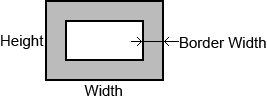 |
Circle
 |
Ring
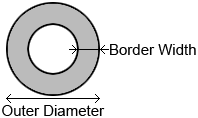 |
Triangle with Edge Lengths

|
Triangle with Base & Height
 |
Trapezoid
 |
Sector
 |
Parallelogram
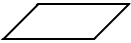 |
Reference:
1 acre = 43,560 square foot
1 square yard = 9 square foot
1 square meter = 10.76 square foot
1 square inch = 0.00064516 square foot
Calculating Cost Per Square Foot
When painting a house, installing flooring, or building a home, the square footage of the property is often used to determine the cost or materials to be used.
Painting a house:
Professional house painters often base price quotations on the square footage of a property. Alternatively, even if a person plans to paint their house themselves, measuring square footage can yield accurate estimates of the amount of paint required.
Total cost encompasses more factors than the just amount of paint required, including the cost of materials such as brushes, turpentine, and any materials necessary for preparing, mixing, applying, and cleaning up paint. These considerations are typically included in a quote from a professional painter, in addition to labor costs. Accordingly, the larger the size of a property or area, the higher the cost required to paint it.
Depending on the surface being painted, whether wood, metal, plastic, or something else, paint primer, which helps the paint adhere more effectively to a given surface, can be used. While the amount of coverage provided by primer or paint depends heavily on the method of application, type, and brand of paint, primer generally covers less area than paint, and estimated coverage amounts can range from anywhere between 200-400 square feet per gallon.
Flooring installation:
There are a number of materials commonly used for flooring, including wood, laminate, and tile. Flooring costs can vary significantly depending on the quality and choice of materials.
Wood Flooring
Wood flooring includes woods such as hardwood, engineered wood (also known as composite or man-made wood), and bamboo, though bamboo is actually classified as grass.
Hardwood flooring is highly durable, easy to clean, and can be found in a variety of different appearances. As such, it is fairly versatile in terms of interior design, but does require some maintenance such as sanding and refinishing over time.
Engineered wood flooring is made from several layers of wood, with a thin outermost layer of the desired hardwood, and inner layers such as plywood and high-density fiberboard. Engineered hardwood has a higher heat and moisture resistance than solid hardwoods, is easy to maintain, and is generally cheaper to purchase and install than hardwood flooring.
Bamboo flooring is easy to maintain, moisture resistant, easy to install, and is available in many different styles. It is often cheaper than traditional hardwood options, but does have the disadvantage of scratching easily as a result of furniture, high heels, claws, or even debris.
Laminate Flooring
Laminate flooring is typically made with plywood or fiberboard with a plastic laminate top layer, and can have a similar look like hardwood. It is less costly than traditional wood flooring, is highly durable, difficult to scratch, stain, or dent, and requires little maintenance. Laminate flooring can even be installed over existing flooring, which can save time as well as the cost of removing old flooring. However, laminate flooring often feels too hard on the feet, cannot be finished or stained – meaning that the owner is stuck with what they choose and will have to entirely replace the floor if they change their mind – and also results in a lower resale value for a home than traditional hardwoods.
Tile flooring
Tile flooring includes concrete or cement, ceramic tiles, glass tiles, and natural stone products among many others. Due to the numerous varieties of tile, there is an incredibly large price range, from 60 cents per square foot, to hundreds of dollars, or even $100,000 per square foot. The many options of tile allow a person to choose a cost and style that best fits their needs. Tile is also easy to maintain, clean, and is suitable for all locations. However, without heating, tile can be cold in the winter. It also does not dampen sound, can be slippery when wet, can break if heavy objects are dropped on them, and cannot easily be repaired. Tile installation is also difficult, and installation costs can be more expensive than the cost of the materials.
Building a home:
When building a home, using building plans and visiting different homes as a reference can help a person to gain a better understanding of what square footages work for their preferences.
The cost of building a home varies largely based on a number of factors, including materials, the type of foundation, the pitch of the roof, and many other characteristics that are not necessarily directly related to the size of the house. Unlike the cost per square foot of installing flooring, which can be estimated based on material, quality, and installation costs, the multitude of factors involved in building a house makes it more difficult to estimate cost per square foot. As such, cost per square foot is often estimated based on averages, and depending on a person's specific project, it may not be an accurate estimate of the cost. Instead, it may be more helpful to get an estimate from a builder based on some given specifications, and divide that estimate by the number of square feet the house will occupy.
Obtaining an estimate of the cost per square foot for a person's specific project can allow comparison to a different house of similar size as a reference. As previously mentioned, houses of the same size do vary significantly in building cost. Thus, having a reference can help a prospective owner decide whether or not to include an elegant master bath, marble tiles, curved staircases, or any other more extravagant features. There are also a number of costs outside of building the house that should be considered, such as fees to local authorities, labor, special requirements from building codes, and insurance.